- Technology Insights Daily
- Posts
- Apple–Google Gemini Partnership Estimated at $5 Billion
Apple–Google Gemini Partnership Estimated at $5 Billion

Technology Insights Daily
January 21, 2026
In partnership with


The headlines that actually moves markets

Tired of missing the trades that actually move markets?
Every weekday, you’ll get a 5-minute Elite Trade Club newsletter covering the top stories, market-moving headlines, and the hottest stocks — delivered before the opening bell.
Whether you’re a casual trader or a serious investor, it’s everything you need to know before making your next move.
Join 200K+ traders who read our 5-minute premarket report to see which stocks are setting up for the day, what news is breaking, and where the smart money’s moving.
By joining, you’ll receive Elite Trade Club emails and select partner insights. See Privacy Policy.
Before my day really starts, I spend a few quiet minutes scanning tech news—not to read everything, but to understand what actually matters. TechnologyInsightsDaily grew out of that habit. This isn’t about chasing every headline; it’s about sharing the few insights that genuinely shape how we work, build, and live. From AI shifts to subtle moves by Big Tech, I write this as someone who’s curious, cautious, and optimistic about where technology is taking us. If you enjoy thoughtful insights with a human voice behind them, welcome—you’re among friends here.

Apple has officially entered into a multi-year partnership with Google to bring Google’s Gemini AI models into its ecosystem, most notably to power the upcoming revamped Siri and broader Apple Intelligence features. According to analysts cited in industry reporting, this cloud-based collaboration could be worth as much as $5 billion to Google over time, reflecting the scale and strategic value of the deal. Unlike Apple’s traditional approach of building most technologies internally, this arrangement taps Google’s advanced generative AI and cloud infrastructure to significantly enhance AI performance on Apple devices.
By integrating Gemini into Siri and other first-party services, Apple aims to close longstanding gaps with competitors in AI responsiveness and contextual understanding. While financial terms aren’t officially disclosed, the reported value underscores how much Apple is investing to modernize its on-device intelligence and keep its ecosystem competitive in an increasingly AI-driven tech landscape.

Spotify has confirmed another price hike for its Premium subscription service in the United States, raising the cost of its Individual plan from $11.99 to $12.99 per month starting with the next billing cycle in February 2026. This marks the third U.S. price increase in about three years, following previous adjustments in 2023 and 2024 as part of the streaming platform’s effort to balance rising operational costs and continued investment in new features and music discovery tools.
In addition to the Individual plan, other tiers including Duo, Family, and Student subscriptions have also seen increases — moves that reflect Spotify’s broader strategy to maintain revenue growth. Although price hikes can frustrate users who are sensitive to subscription costs, Spotify has argued that the adjustments support improvements in personalized recommendations, lossless audio, and artist compensation. The company continues to lead globally in paid subscribers despite competitive pressures from rivals like Apple Music and Amazon Music.

Rumors are circulating about Apple’s next flagship lineup — the iPhone 18 Pro and iPhone 18 Pro Max — with leaks suggesting as many as 12 noteworthy enhancements beyond the current generation. Although Apple has not yet confirmed details, analysts and supply-chain insiders project improvements spanning performance, design, and user experience. The core of these upgrades is expected to be a new A20 Pro chip, built on an advanced 2 nm process that promises boosted performance and better energy efficiency compared with the current A19 family. Additional rumored features include refined display tech, potentially thinner bezels, under-screen Face ID, enhanced camera systems, and continued focus on connectivity and AI capabilities.
These Pro models may retain the familiar 6.3-inch and 6.9-inch screen sizes while evolving their aesthetic details and internal architecture. If these rumors hold, Apple would be building on its strengths in computational photography, processing power, and software integration to deliver a noticeably more capable Pro experience for power users and professionals alike.

Apple has recently updated its official trade-in value listings for a range of devices including iPhones, Macs, iPads, and Apple Watches. According to the company’s website, many older iPhone models saw slight declines in estimated trade-in worth, reflecting normal depreciation as newer devices approach launch windows and as demand shifts. At the same time, an interesting trend emerged for certain Mac models, which have received higher trade-in valuations — a possible reflection of sustained demand for used laptops among creators, professionals, and remote workers.
These adjustments matter because Apple’s trade-in credits can be applied directly toward new hardware purchases or redeemable as Apple Gift Cards. For users planning to upgrade, especially to new iPhone Pro models or Apple’s rumored first foldable iPhone, improved Mac values could offset some of the cost. Conversely, lower iPhone trade-in estimates may push users to trade sooner rather than later to maximize credit. Overall, the updated values offer insight into how Apple perceives device demand and market conditions heading into 2026.
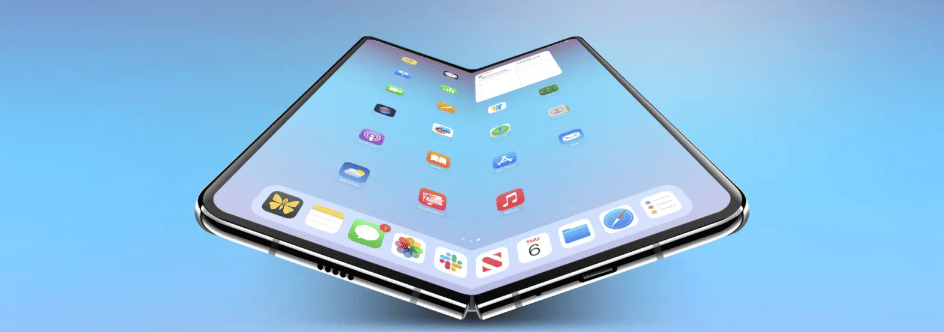
Apple’s rumored foldable iPhone and the upcoming iPhone 18 Pro lineup are expected to share a next-generation A20 Pro chipset, built on TSMC’s cutting-edge 2 nm (N2) process. According to industry analyst notes, this chip should deliver notable gains in speed, energy efficiency, and on-device AI performance compared with the A19 series used in previous generations. In addition to the advanced process node, the A20 Pro may incorporate WMCM (Wafer-Level Multi-Chip Module) technology, which packs CPU, GPU, neural engine, and RAM closer together for better performance and power handling.
Beyond silicon, the rumored foldable iPhone is said to sport a wide “book-style” foldable display with a crease-free internal screen, paired with a secondary outer display — a move that would position Apple in direct competition with existing Android foldables. Shared specs across the Pro and Fold devices may include 12 GB of RAM and a robust camera system, alongside Apple’s own C2 modem for modern connectivity. Such hardware upgrades align with Apple’s push toward more powerful, versatile mobile computing while laying groundwork for the company’s next era of form factors.
If today’s insight made you pause or think, I’d love to have you back tomorrow.
Subscribe to TechnologyInsightsDaily for clear, human-first tech insights—free, every weekday.
If you know someone who’d enjoy this, feel free to forward it, share it, or invite them to join. Every small share helps this newsletter grow, and I’m truly grateful.
Until tomorrow 👋