- Technology Insights Daily
- Posts
- Gemini can directly access NotebookLM data
Gemini can directly access NotebookLM data

Technology Insights Daily
December 24, 2025
In partnership with


Go from AI overwhelmed to AI savvy professional

AI keeps coming up at work, but you still don't get it?
That's exactly why 1M+ professionals working at Google, Meta, and OpenAI read Superhuman AI daily.
Here's what you get:
Daily AI news that matters for your career - Filtered from 1000s of sources so you know what affects your industry.
Step-by-step tutorials you can use immediately - Real prompts and workflows that solve actual business problems.
New AI tools tested and reviewed - We try everything to deliver tools that drive real results.
All in just 3 minutes a day
Before this newsletter existed, my mornings started the same way yours probably do now—too many tabs, too much noise, and not enough clarity. I built TechnologyInsightsDaily as my own filter: one place to understand what’s actually changing in AI, software, cybersecurity, and emerging tech. No hype, no filler—just practical insights I’d want to read myself. If you care about staying informed without feeling overwhelmed, you’re exactly who I write this for.

Google’s Gemini app is expanding with tighter NotebookLM integration, letting users tap into their saved NotebookLM content directly from within Gemini’s interface. With this feature rolling out broadly, when you open the Gemini web app you should now see a “NotebookLM” option alongside familiar actions like uploading files or adding photos. Selecting it brings up a list of your existing notebooks, showing creation dates and source counts, which you can then pull into Gemini prompts. This makes your research much more seamless: instead of copying text or re-uploading sources, Gemini can work off your organized NotebookLM dataset, combining AI responses with your prior learning and notes. The integration is being gradually enabled and doesn’t yet require a separate NotebookLM app window — it streamlines your workflow by centralizing your research and generative conversations.

After Apple discontinued the original iMac Pro in 2021, rumors are building that a new high-end iMac is in the works for 2026, this time powered by a next-generation M5 Max chip. Internal leaks referenced by industry observers — particularly developers’ kernel debug kits — have hinted at hardware identifiers tied to this new all-in-one machine. The M5 Max would provide a significant performance boost, positioning the revived iMac Pro as a compelling choice for professionals who want desktop-class horsepower without the need for a separate Mac Studio or Mac Pro. Expectations include support for high-brightness displays with HDR, ProMotion refresh rates, and expanded I/O such as Thunderbolt 5 and 10 Gb Ethernet, rivalling Apple’s standalone desktop offerings. While Apple hasn’t officially announced the device, the leaks suggest that Cupertino may be preparing to re-enter the high-performance all-in-one market.

Apple has quietly updated its Self Service Repair program so that the 14-inch MacBook Pro with the M5 chip now offers a much simpler battery-only replacement process. Previously, swapping a worn-out battery often required removing multiple internal components, making DIY or third-party repairs time-consuming and expensive. Under the new approach, users can access and replace just the battery after removing the bottom case and disconnecting the battery flex cable, without dismantling other modules. Apple also started selling the standalone battery module and necessary tools through its Self Service Repair Store, along with updated manuals with step-by-step instructions. This shift makes real repairs more practical for technically adept users and repair shops alike — potentially reducing repair time, cost, and waste. For Apple, the change responds to ongoing industry and regulatory pressure to improve device repairability while giving consumers more control over maintenance options.

Rumors and leaks emerging from an internal iOS 26 beta build suggest that Apple’s long-anticipated iPhone Fold could arrive in 2026 with a foldable display that, when fully opened, approaches the size of an iPad mini. The code names extracted from this early iOS build include an “iPhone Fold,” indicating Apple is actively working on such a device. If the unfolded screen does indeed rival the dimensions of a mini tablet, this would place the iPhone Fold in a unique niche between conventional phones and tablets, potentially replacing the need for both in a single device. A larger foldable screen could dramatically improve multitasking, media consumption, and productivity on the go, setting Apple’s entry into the folding category apart from typical smartphone form factors. While no official specs or release dates are confirmed, the leaked product codename reinforces the idea that Apple is exploring bold hardware directions beyond traditional slab phones.
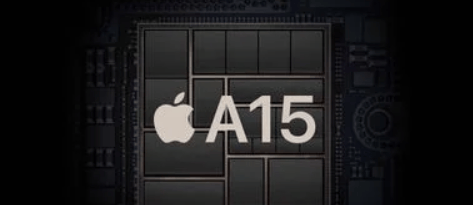
Internal Apple development files have revealed that engineers once tested a MacBook powered by the A15 Bionic chip, the same generation of silicon found in older iPhones and iPads. While this prototype likely won’t be the final retail design, its existence suggests Apple has explored using lower-cost silicon as part of a strategy to broaden its Mac lineup into more affordable territory. Mainstream models currently use Apple’s M-series chips, but a bargain-focused MacBook built around an A-series chip could appeal to budget-conscious buyers if it ever shipped. Testing with the A15 might have helped Apple assess performance, battery life, and thermals before settling on designs using slightly newer chips like the A18 Pro for production units. If Apple eventually pursues a low-price MacBook segment, pricing could be significantly lower than typical MacBook Air or Pro models, making macOS hardware more accessible to students, casual users, and price-sensitive markets.
If today’s issue saved you time or sparked a new idea, that’s why I keep doing this.
Subscribing helps me continue digging deeper, testing tools, and sharing what truly matters—every single day.
👉 Subscribe to support independent tech insights
👉 Forward this to a friend who loves smart tech news
👉 Share or refer someone who hates information overload
Your support means more than you know—thanks for being here.