- Technology Insights Daily
- Posts
- Spotify: 256 million songs, 300 TB of data scraped and spreading via Torrent
Spotify: 256 million songs, 300 TB of data scraped and spreading via Torrent

Technology Insights Daily
December 29, 2025
In partnership with



Join over 4 million Americans who start their day with 1440 – your daily digest for unbiased, fact-centric news. From politics to sports, we cover it all by analyzing over 100 sources. Our concise, 5-minute read lands in your inbox each morning at no cost. Experience news without the noise; let 1440 help you make up your own mind. Sign up now and invite your friends and family to be part of the informed.
Every morning, before the headlines explode across social media, I scan dozens of tech sources so you don’t have to. Some days it’s Apple quietly changing the rules. Other days it’s AI making a move that reshapes how we work, invest, or build.
TechnologyInsightsDaily exists for people who want clarity—not noise.
If you care about where technology is really heading (and how it affects your money, career, and daily life), you’re in the right place. Let’s make sense of the future—together.

In late December 2025, a group known as Anna’s Archive claimed it had scraped Spotify’s enormous music library, assembling metadata for nearly all 256 million tracks and audio files for about 86 million songs into a 300 TB dataset that could be shared via torrents. This collection, while only representing around 37 % of Spotify’s total catalog, covers roughly 99.6 % of all user listens and includes metadata such as song titles, artists, and album information. Spotify confirmed unauthorized scraping and said it is investigating the activity, though it emphasizes that user accounts and personal data were not compromised. The incident reignites long-standing industry debates about piracy, digital preservation, and streaming security, since the so-called archive frames itself as preserving cultural content, despite clear legal concerns about copyright infringement and illicit distribution.
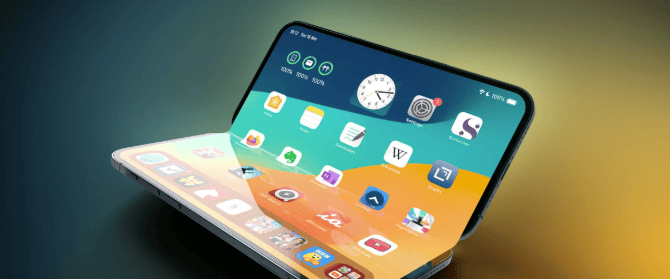
Despite years of rumors and leaks, Apple appears to still be refining the core display technology behind its anticipated foldable iPhone. One of the biggest engineering challenges lies in creating a truly crease-free folding screen — something that has eluded even established foldable smartphone makers. Reports suggest Apple is experimenting with ultra-thin flexible glass (UFG) engineered to bend without visible distortion, but that technology may not yet be production-ready. Traditional foldable screens typically develop a visible crease at the hinge over time, which Apple wants to avoid to maintain its premium user experience. If the crease-free glass isn’t finalized soon, Apple may either delay mass production or launch with limited initial supply. These hurdles illustrate how high Apple’s quality bar is for new form factors, especially when entering a market long dominated by Android manufacturers.

Leaked details about Apple’s first foldable iPhone suggest that the outer screen — the display visible when the device is folded — may measure roughly 5.25 inches. That would make it smaller than the iPhone mini models Apple has released in the past, which typically had screens in the 5.4-inch range. The compact external panel design could be a trade-off between portability and usability, but it also raises questions about how much of a niche device this might be. Some leaks portray the phone as having a larger internal display of around 7.8 inches when unfolded, with both inner and outer screens sporting punch-hole cameras. But the smaller outer display could influence how users interact with daily tasks like notifications, quick replies, and media playback when the device is folded. Given Apple’s pattern of prioritizing design symmetry and user experience, this dimension could reflect broader engineering compromises in the foldable’s development.

Apple is continuing to grow support for digital driver’s licenses and state IDs in the iPhone and Apple Watch Wallet app. The capability, which lets users present official identification at participating locations such as airports, is currently live in 13 states and Puerto Rico. According to recent reports, another seven states — including Connecticut, Kentucky, Mississippi, Oklahoma, Utah, Arkansas, and Virginia — have signed on to adopt the feature in the near future, although exact timelines remain undisclosed. To use the service, residents in supported states can add their physical driver’s license or ID to Apple Wallet and present it digitally at TSA checkpoints and other compatible scanners. While digital IDs don’t replace the physical card for everything (for example, law enforcement stops in many regions still require the physical license), this expansion underscores Apple’s ongoing efforts to make secure, on-device identity verification more widespread and convenient.
For the first time in Gmail’s history, Google is introducing a feature that lets users change their primary @gmail.com email address without abandoning their existing account or losing data. According to recently updated support documentation and tech news reports, this option is currently rolling out gradually, starting in select regions. Under the new system, users can choose a new Gmail username while keeping all existing emails, contacts, Drive files, and account history intact. Importantly, the original email address automatically becomes an alias, meaning messages sent to either address arrive in the same inbox. To limit misuse, Google appears to have implemented guardrails: users can change their address only once every 12 months and up to a total of three times over the account’s lifetime. While not yet universally available, this development could dramatically improve user flexibility, especially for those with outdated or unprofessional email addresses.
If this issue helped you see tech a little more clearly, imagine what you’ll gain with full access.
Paid members support independent research—and get deeper insights, smarter summaries, and early access to trends before they go mainstream.
👉 Upgrade to paid to keep this newsletter alive
📩 Forward this to a friend who loves tech
💬 Share or refer someone who hates missing what’s next
Your support turns curiosity into consistency. Thank you for reading ❤️